Nasi Goreng: Java's Authentic Fried Rice, A Taste of Indonesia
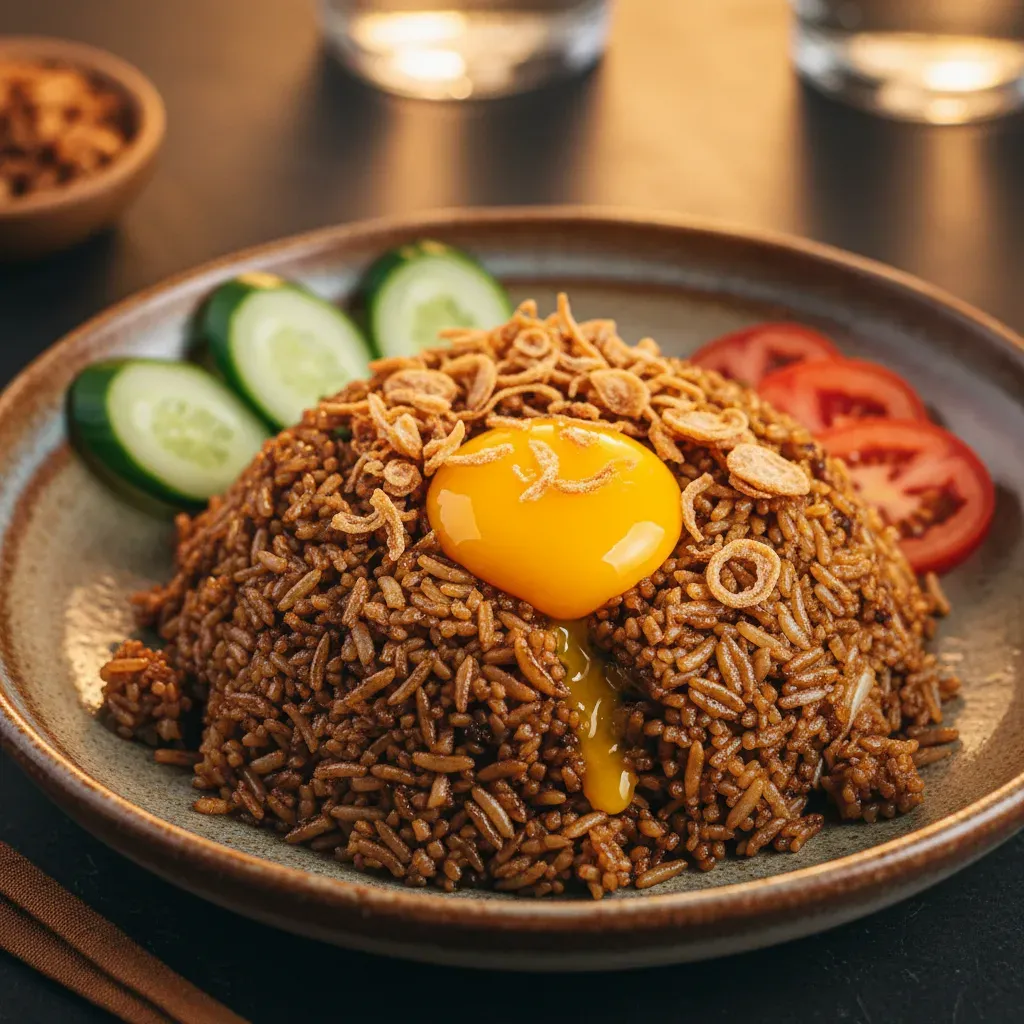
🍛 Dive into Indonesia's true flavors. This traditional Nasi Goreng blends fried rice, kecap manis, dried shrimp, and a sunny-side-up egg, delivering an exotic culinary experience that's quick to bring to your table.
🛒 Ingredients
- 300g arroz jazmín cocido (frío)
- 2 cucharadas aceite vegetal
- 2 chalotas, picadas finas
- 2 dientes ajo, picados
- 1 cucharada camarones secos, remojados y picados (o 1 cucharadita pasta de camarones)
- 1 chile rojo, picado (opcional)
- 100g pollo o gambas, picados (opcional)
- 2-3 cucharadas kecap manis
- 1 cucharadita salsa de pescado
- 2 unidades huevo
- Al gusto pepino, tomate y cebolleta frita (para guarnición)
🍛 The Traditional Taste of Java: Indonesian Nasi Goreng
Nasi Goreng, literally meaning "fried rice" in Indonesian, is far more than just a dish: it's an emblem of Indonesia's vibrant culinary heritage. This classic combines fried rice with an explosion of umami flavors, thanks to the rich kecap manis (sweet soy sauce), the profound depth of dried shrimp, and the creamy indulgence of a sunny-side-up egg crowning each serving. It's a remarkably versatile dish, often prepared to transform humble leftover rice into a comforting meal brimming with character and soul.
🌍 Origin and History of the Dish
- Heart of Java: Hailing from the island of Java, Nasi Goreng is a dish deeply rooted in Indonesian culture, considered a staple, especially popular for breakfast, transforming humble leftover rice into a delightful treat.
- Influence and Adaptation: While the technique of fried rice has its roots in Chinese cuisine, Nasi Goreng has forged its own distinct identity in Indonesia, embracing local ingredients such as kecap manis, sambal, and a vibrant array of indigenous spices.
- Traditional Versatility: More than just a fixed recipe, Nasi Goreng embodies a culinary philosophy. Its preparation varies immensely from region to region and home to home, allowing for the inclusion of different meats (chicken, lamb), vegetables, or even tempeh, truly reflecting the incredible diversity of Indonesian gastronomy.
📝 Detailed Step-by-Step Preparation
- Prepare the Ingredients: Ensure your cooked jasmine rice (about 300g) is cold and loose; this is crucial for a perfect Nasi Goreng. Finely chop 2 shallots, 2 cloves of garlic, and 1 red chili (optional). Soak and finely chop 1 tablespoon of dried shrimp or have 1 teaspoon of shrimp paste (belacan) ready.
- The Aromatic Sauté: Heat 2 tablespoons of vegetable oil in a wok or large skillet over medium-high heat. Add the shallots, garlic, chili, and dried shrimp (or shrimp paste). Sauté for 2-3 minutes until fragrant.
- Cook the Proteins (Optional): If using 100g of chicken or prawns cut into small pieces, add them now and cook for 3-4 minutes until thoroughly cooked. Remove the proteins from the wok and set aside if you prefer them not to be overly mixed in.
- Incorporate the Rice: Add the cold rice to the wok and break up any clumps with your spatula. Stir-fry for 5-7 minutes, stirring constantly, ensuring the rice heats evenly and absorbs all the wonderful flavors.
- Season and Mix: Reincorporate the proteins (if you set them aside). Add 2-3 tablespoons of kecap manis and 1 teaspoon of fish sauce. Mix thoroughly until the rice is evenly coated and beautifully caramelized. Cook for 2 more minutes.
- The Sunny-Side-Up Egg: In a separate pan, heat a little oil and fry 2 eggs until the whites are set and the yolk is still runny.
- Serve and Enjoy: Plate the hot Nasi Goreng, crowning each portion with a perfect sunny-side-up egg. Serve immediately, optionally accompanied by slices of cucumber, tomato, and crispy fried shallots.
Prepare yourself for a culinary journey straight to Indonesia with every single bite of this homemade Nasi Goreng!