The Flavor's Secret: Authentic Homemade Tonkotsu Ramen
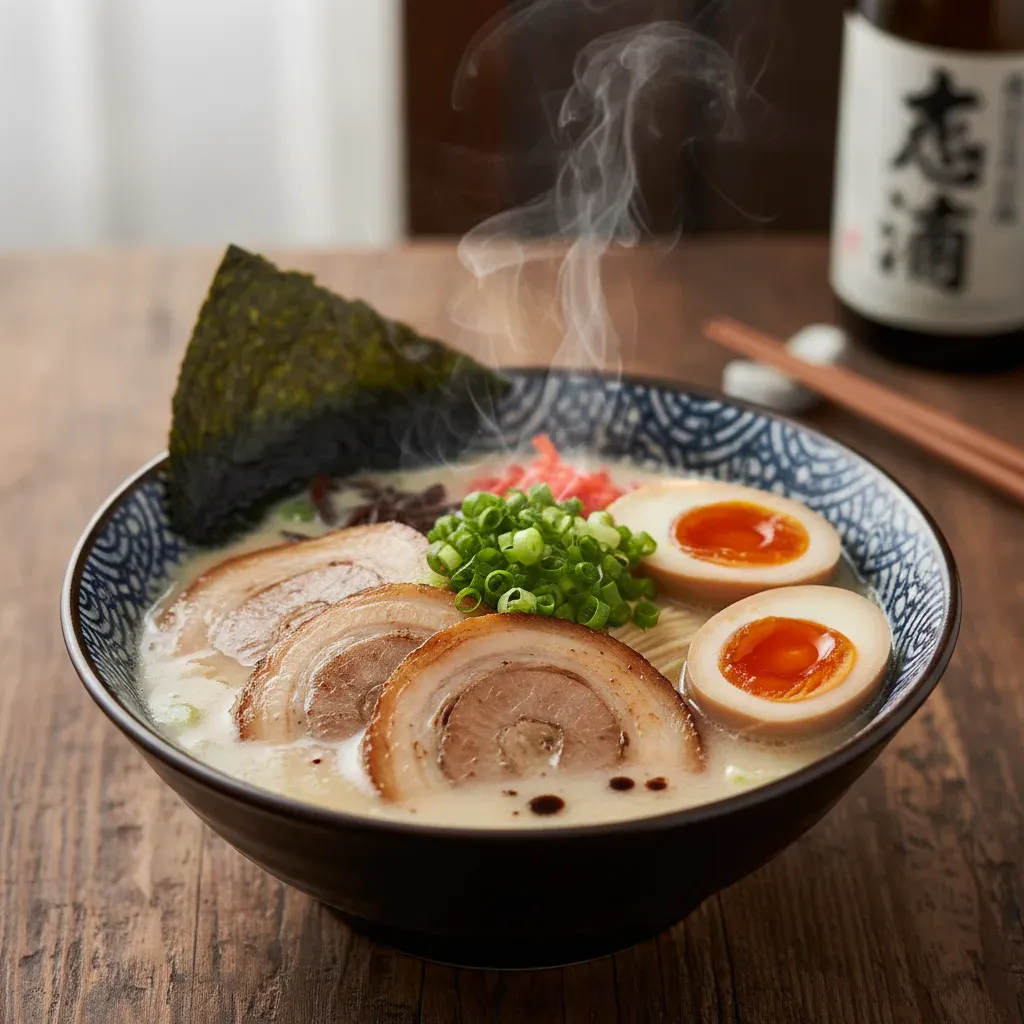
🍜 Ready for a culinary journey? Savor authentic Hakata-style Tonkotsu Ramen, featuring its 18-hour slow-cooked pork broth, tender chashu, and marinated egg. A rich, traditional, gourmet dish that truly revitalizes your spirit.
🛒 Ingredients
- 2 kg huesos de cerdo (patas, rodillas y espinazo)
- 500g grasa de cerdo (opcional)
- 1 cebolla grande, partida por la mitad
- 1 puerro, parte blanca
- 50g jengibre fresco, en rodajas
- 6 dientes de ajo
- Agua (suficiente)
- 500g panceta de cerdo deshuesada, enrollada y bridada
- 200ml salsa de soja japonesa
- 100ml mirin
- 100ml sake de cocina
- 50ml agua
- 2 cucharadas de azúcar moreno
- 3 rodajas de jengibre fresco
- 2 dientes de ajo, aplastados
- 4 huevos grandes
- 50ml salsa de soja japonesa
- 50ml mirin
- 50ml agua
- 1 cucharadita de azúcar
- 200g fideos ramen (finos, estilo Hakata)
- 1 hoja de nori tostado por ración
- Cebolleta fresca picada al gusto
- Aceite de sésamo tostado (opcional)
- Rayu (aceite de chile japonés, opcional)
🍜 Japan's Soul in a Bowl: Tonkotsu Ramen
Prepare to immerse yourself in the essence of Japanese gastronomy with the Tonkotsu Ramen, a dish that transcends mere soup to become a profound culinary experience. Hailing from the Fukuoka region, this ramen is renowned for its dense, creamy broth, crafted from pork bones simmered gently for a minimum of 18 hours. Its milky texture and unmistakable umami flavor are perfectly complemented by ramen noodles, chashu (marinated and braised pork slices), Ajitama marinated egg, and nori sheets. It's a truly traditional delight that comforts the soul.
🌍 Origin and History of the Dish
- Born in Hakata: Tonkotsu Ramen traces its roots to the street stalls of Kurume, Fukuoka, but it was in the Hakata district where it truly gained its renown. It originated as a humble, economical meal for laborers, who needed a substantial and energizing dish. Its popularity quickly spread across Japan.
- The Secret of the White Broth: The most distinctive characteristic of Tonkotsu is its milky white broth. This appearance is achieved through a prolonged and vigorous simmering of pork bones, which emulsifies fats and collagen, releasing nutrients and flavors until a rich, opaque consistency is achieved. This technique is the key to its unparalleled depth of flavor.
- Evolution and Tradition: While its origins are humble, Tonkotsu has evolved into a gourmet dish. Nevertheless, the essential elements – the thick broth, tender chashu, marinated egg, and thin noodles – remain intact, honoring its rich tradition and its ability to offer a complete and profoundly satisfying meal.
📝 Detailed Step-by-Step Preparation
For two servings, assuming the Tonkotsu broth, chashu, and Ajitama eggs are already prepared:
- Heat the Broth: In a medium pot, heat 1 litre of Tonkotsu broth until it's just about to boil. Keep it on low heat.
- Cook the Noodles: Bring a generous amount of water to a boil in another pot. Add 200g of fresh ramen noodles and cook for 2-3 minutes or according to package instructions. Drain them well.
- Prepare the Bowls: Divide the tare (seasoning base) between two large bowls. A pinch of sea salt and a dash of mild soy sauce will also serve to enhance the flavor.
- Assemble the Ramen: First, place the drained noodles into each bowl. Then, pour the hot Tonkotsu broth over the noodles, ensuring they are well submerged.
- Add the Toppings: Carefully arrange 4 slices of chashu, 2 Ajitama eggs (halved), and 2 sheets of nori in each bowl. Sprinkle with 1 tablespoon of chopped spring onion and add a few drops of sesame oil. For a spicy kick, a pinch of togarashi is ideal.
- Serve Immediately: Tonkotsu ramen is best enjoyed fresh. Serve and savor!
Enjoying Tonkotsu Ramen is a ritual! Take your time to savor each component and the profound depth of its broth. A delight truly worth every second!