Hong Kong's Culinary Soul: Cantonese Dim Sum – A Traditional Recipe
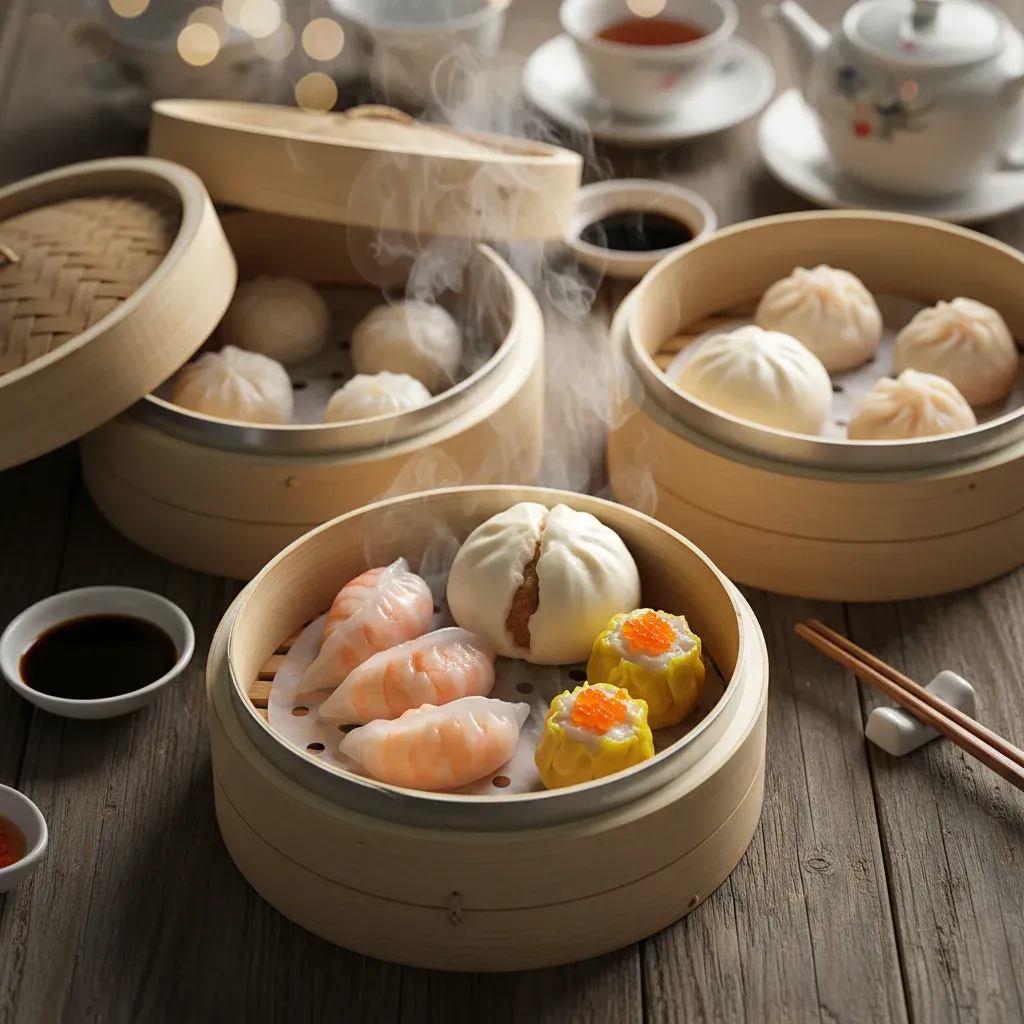
🥟 Dive into Hong Kong's culinary tradition with this Cantonese Dim Sum. Craft exquisite har gow, siu mai, and char siu bao—a gourmet feast celebrating rich gastronomic heritage. Perfect for a ceremonial breakfast.
🛒 Ingredients
- 200g gambas peladas y desvenadas
- 50g brotes de bambú escurridos
- 20g grasa de cerdo (opcional)
- 1 cucharadita aceite de sésamo
- 1/2 cucharadita sal
- 1/4 cucharadita pimienta blanca
- 50g almidón de trigo
- 50g almidón de tapioca
- 100ml agua hirviendo
🥟 A Culinary Journey to Hong Kong: Cantonese Dim Sum
Cantonese Dim Sum is far more than just a meal; it's a cultural experience, a cherished morning ritual known as "yum cha" in Hong Kong. This collection of small, delicately prepared portions, traditionally served in bamboo steamers, offers an explosion of flavors and textures. From the translucent har gow filled with succulent shrimp, to the juicy pork and shrimp siu mai, and the fluffy char siu bao with its sweet roasted pork filling, each bite is a testament to the sophistication of Cantonese cuisine.
🌍 Origin and History of the Dish
- Canton, Cradle of Dim Sum: Originating from the Canton region in Southern China, Dim Sum initially gained popularity as a light snack served in teahouses along the ancient Silk Road, offering travelers a moment of rest and sustenance.
- The Yum Cha Ritual: The expression "yum cha" (飲茶), meaning "to drink tea," encapsulates the very essence of this tradition. It's not merely about eating, but about socializing and savoring a wide variety of small dishes while sharing a pot of tea, a custom deeply rooted in Chinese culture.
- From Snack to Feast: What began as a simple accompaniment to tea has evolved over centuries into the elaborate and diverse selection we know today. In Hong Kong, Dim Sum is a cornerstone of gastronomy, boasting hundreds of varieties ranging from savory to sweet.
📝 Detailed Step-by-Step Preparation
For approximately 12 Har Gow:
- Prepare the Filling: Finely chop 200g of peeled and deveined shrimp, 50g of drained bamboo shoots, and 20g of pork fat (optional, for extra juiciness). Mix everything in a bowl with 1 teaspoon of sesame oil, 1/2 teaspoon of salt, and 1/4 teaspoon of white pepper. Refrigerate for 30 minutes.
- Make the Dough: In a heatproof bowl, combine 50g of wheat starch and 50g of tapioca starch. Carefully pour in 100ml of boiling water and quickly mix with a wooden spoon until a sticky dough forms. Cover and let rest for 5 minutes.
- Knead and Roll: Transfer the dough to a lightly oiled surface. Knead for 5-7 minutes until smooth and elastic. Divide the dough into 12 equal portions. Roll each portion very thinly with a rolling pin or the flat side of a knife, forming discs approximately 7-8 cm in diameter.
- Fill and Fold: Place approximately 1 tablespoon of the filling in the center of each dough disc. Fold the dough in half and seal the edges, creating small pleats along one side to form the characteristic "crest" of the har gow. Ensure they are tightly sealed to prevent steam from escaping.
- Steam Cook: Place the har gow in a steamer lined with perforated parchment paper or lettuce leaves to prevent sticking. Steam over medium-high heat for 8-10 minutes, or until the dough is translucent and the shrimp are cooked through. Serve immediately.
Dare to explore the diversity of Dim Sum! With practice, you'll master these delights and surprise everyone with an authentic Cantonese feast.