Greek Moussaka: A Culinary Journey to the Heart of Attica
🍆 Discover Greece's authentic flavor with our Moussaka. This traditional Attica recipe layers tender eggplants, spiced lamb, and golden béchamel, creating a rich, comforting culinary experience that transports you to the Mediterranean. Prepare it today!
🛒 Ingredients
- 2 berenjenas grandes (aprox. 800g)
- Sal gruesa
- 400g carne de cordero picada
- 1 cebolla grande, picada finamente
- 2 dientes de ajo, picados
- 400g tomate triturado
- 100ml vino tinto seco
- 1 cucharadita de canela molida
- 1/2 cucharadita de nuez moscada
- Pimienta negra al gusto
- Aceite de oliva virgen extra
- 75g mantequilla
- 75g harina de trigo
- 750ml leche entera, caliente
- 1/4 cucharadita de nuez moscada (para bechamel)
- Sal y pimienta blanca al gusto (para bechamel)
- 50g queso Parmesano rallado
🍆 The Heart of Hellenic Cuisine: Greek Moussaka
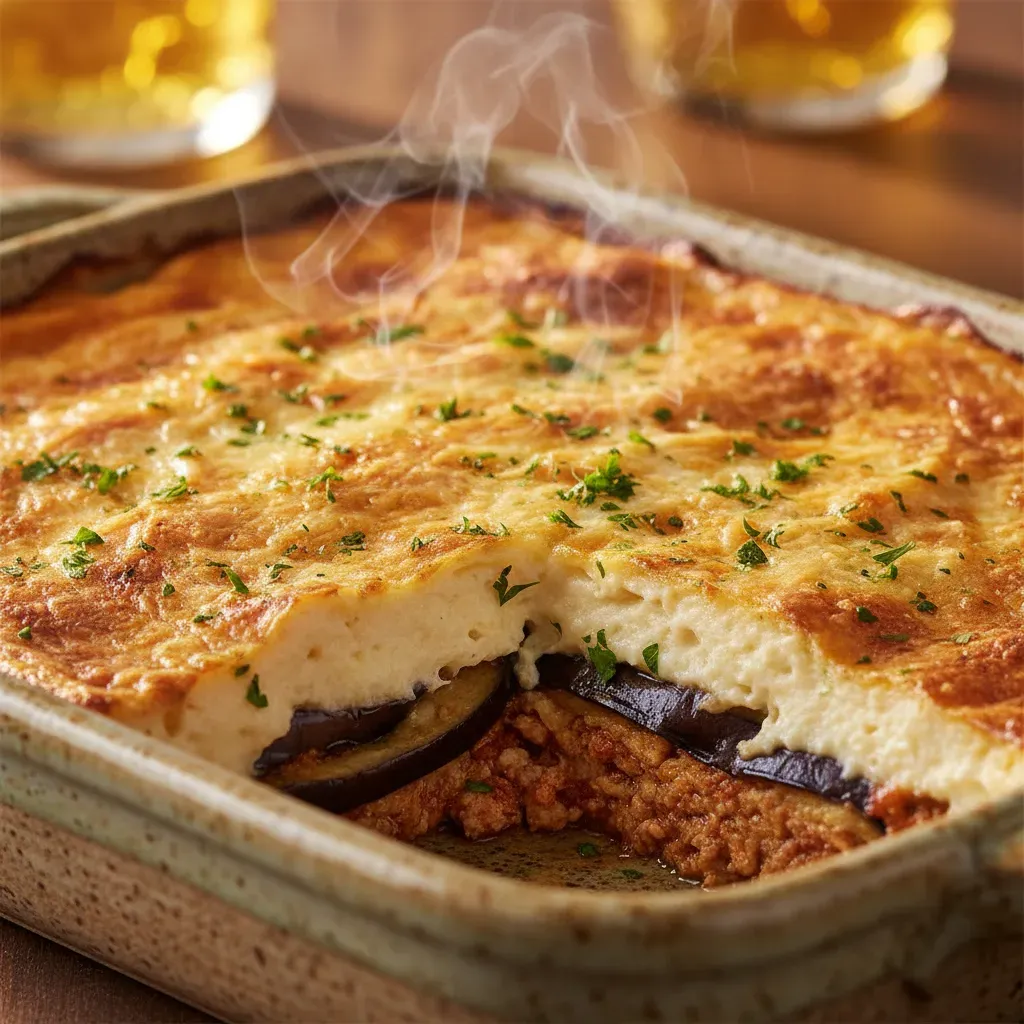
Greek Moussaka is an icon of Mediterranean gastronomy, a gratin dish that embodies the richness and flavor of Hellenic cuisine. Originating from Attica, this classic recipe is distinguished by its perfectly harmonized layers of gently fried eggplants, a succulent preparation of spiced lamb meat, and, crowning the ensemble, a creamy, golden béchamel sauce. It's a creation that demands time and dedication, but the result is a feast of intense textures and flavors, ideal for sharing on special occasions.
🌍 Origin and History of the Dish
- Ottoman Roots: Although Moussaka is emblematic of Greece, its origin traces back to culinary influences from the Ottoman Empire, sharing similarities with dishes from the Middle East and the Balkans, where layered meat and vegetables are common.
- The Modern Greek Version: The recipe as we know it today, with its distinctive béchamel layer, was popularized in Greece in the early 20th century by chef Nikolaos Tselementes, who sought to "westernize" Greek cuisine by adding French touches.
- A Festive Dish: Traditionally, Moussaka is reserved for celebrations and family gatherings, reflecting the generosity and warmth of Greek hospitality. Each region may have its own variations, but the combination of eggplant, lamb, and béchamel is its hallmark.
📝 Detailed Step-by-Step Preparation
- Prepare the Eggplants: Slice the 2 large eggplants into 0.5 cm thick rounds. Sprinkle with coarse salt and let them rest in a colander for 30 minutes to release their bitterness. Rinse and dry them thoroughly. Fry them in ample olive oil until golden, then drain them on absorbent paper.
- Prepare the Lamb Meat: In a large pan with 2 tablespoons of olive oil, sauté the 1 large chopped onion until translucent (5-7 minutes). Add the 2 minced garlic cloves and cook for 1 more minute. Incorporate the 400g of minced lamb meat and cook until browned, breaking it up with a spoon.
- Sauce the Meat: Pour in the 100ml of red wine and let the alcohol evaporate. Add the 400g of crushed tomatoes, 1 teaspoon of cinnamon, 1/2 teaspoon of nutmeg, salt, and pepper to taste. Simmer for 20-25 minutes, or until the sauce thickens.
- Prepare the Béchamel: In a saucepan, melt the 75g of butter over medium heat. Add the 75g of flour and cook, stirring, for 2 minutes to form a roux. Gradually incorporate the hot whole milk (750ml), whisking constantly to prevent lumps. Cook until thickened. Season with 1/4 teaspoon of nutmeg, salt, and white pepper.
- Assemble the Moussaka: Preheat the oven to 180°C (350°F). In a baking dish, spread a layer of eggplants. Cover with half of the lamb meat. Repeat with another layer of eggplants and the remaining meat. Finish with a final layer of eggplants.
- Bake and Gratinate: Pour the béchamel sauce over the last layer of eggplants, ensuring it covers the entire surface. Optionally, sprinkle with 50g of grated Parmesan cheese. Bake for 40-50 minutes, or until the béchamel is golden and bubbling. Let it rest for 10-15 minutes before serving.
Patience is key for a perfect Moussaka! Let the dish rest before slicing so the flavors can meld and the layers don't fall apart.