Hungarian Goulash: The Soulful Stew That Captures Every Palate
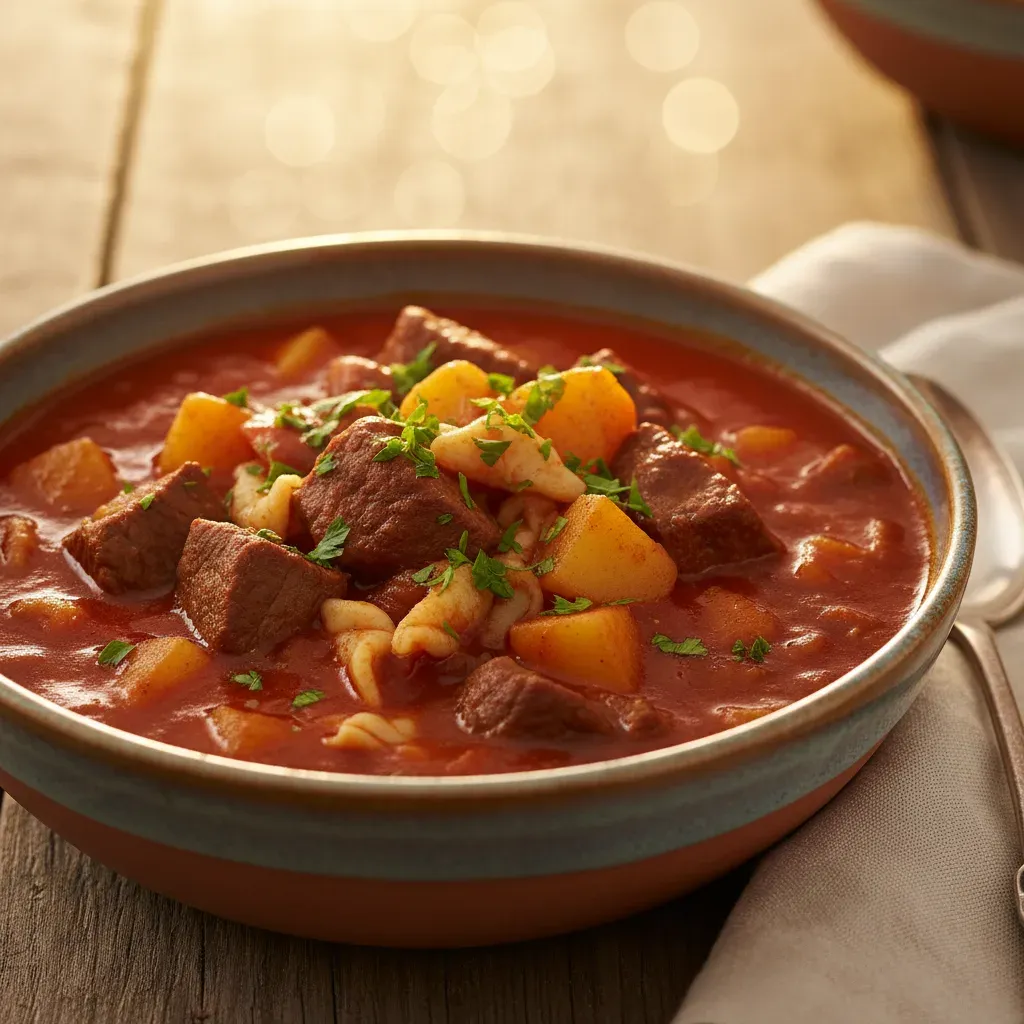
🍲 Ready for an authentic taste of Hungary? Dive into our Hungarian Goulash, a traditional beef stew featuring vibrant Kalocsa paprika, potatoes, and homemade csipetke pasta. A rich, deeply comforting culinary experience awaits.
🛒 Ingredients
- 1 kg de ternera para guisar, cortada en cubos de 3-4 cm
- 2 cebollas grandes, picadas finamente
- 4 dientes de ajo, picados
- 3 cucharadas de pimentón dulce de Kalocsa
- 1 cucharada de pimentón picante (opcional)
- 2 tomates maduros, pelados y picados (o 400g de tomate triturado)
- 2 zanahorias medianas, peladas y en rodajas gruesas
- 500g de patatas, peladas y cortadas en cubos grandes
- 1.5 litros de caldo de carne
- 2-3 hojas de laurel
- Sal y pimienta negra al gusto
- 3 cucharadas de aceite vegetal o manteca de cerdo
- 150g de harina de trigo (para las csipetke)
- 1 huevo grande (para las csipetke)
- Una pizca de sal (para las csipetke)
- 1-2 cucharadas de agua (si es necesario, para las csipetke)
🍲 The Soul of Hungary on Your Table: Hungarian Goulash
Hungarian Goulash is far more than just a simple stew; it's a culinary celebration of Magyar gastronomy. This emblematic dish stands out for its profound flavor, achieved through the slow cooking of tender beef and the generous addition of Kalocsa paprika, a distinctive ingredient that gives it its characteristic color and aroma. Accompanied by potatoes and small, homemade csipetke pasta, goulash is a robust and comforting dish, perfect for sharing on any occasion.
🌍 Origin and History of the Dish
- Pastoral Roots: It originated as a humble stew among Magyar shepherds (gulyás, "shepherd" in Hungarian) in the Middle Ages, cooked in cauldrons over open fires.
- The King of Paprika: Although paprika is its distinctive hallmark today, it wasn't widely incorporated into the recipe until the 17th century, after its arrival in Europe, transforming its flavor and color.
- National Symbol: Elevated to a national dish in the 19th century, it became a standard-bearer of Hungarian identity, with each region contributing its nuances and variations.
📝 Detailed Step-by-Step Preparation
- Initial Sauté: Heat 3 tablespoons of vegetable oil or lard in a large pot over medium heat. Add 2 large finely chopped onions and sauté until transparent, about 8-10 minutes. Stir in 4 minced garlic cloves and cook for 1 more minute.
- Sear Beef: Remove the onion and garlic to one side. Increase the heat and sear 1 kg of beef, cut into 3-4 cm cubes, in batches until well browned on all sides. This will add depth of flavor. Return the onion and garlic to the pot.
- Paprika and Liquid: Remove the pot from the heat for a moment to prevent the paprika from burning and turning bitter. Add 3 tablespoons of sweet Kalocsa paprika and 1 tablespoon of hot paprika (optional), stirring quickly. Return to the heat, add 2 ripe peeled and diced tomatoes (or 400g crushed tomatoes) and cook for 5 minutes.
- Simmer the Stew: Pour in 1.5 liters of hot beef broth, add 2-3 bay leaves, salt and black pepper to taste. Bring to a boil, then reduce the heat, cover, and simmer for 1.5 - 2 hours, or until the beef is almost tender.
- Add Vegetables: After this time, add 2 medium carrots, thickly sliced, and 500g of peeled potatoes cut into large cubes. Cook for another 20-30 minutes, or until the potatoes are tender.
- Prepare Csipetke: While the goulash is cooking, mix 150g of all-purpose flour, 1 large egg, and a pinch of salt. Knead until a firm dough is formed (if necessary, add 1-2 tablespoons of water). Form small balls or pinch off irregular pieces. Cook in boiling salted water for 3-4 minutes, or until they float. Drain.
- Finishing Touch: Incorporate the cooked csipetke into the goulash about 5 minutes before serving. Adjust seasoning. Let it rest for a few minutes before serving, ideally accompanied by a dollop of sour cream.
Savor this culinary journey to Hungary! Goulash tastes even better the next day, so don't hesitate to prepare a generous batch.